
Let’s be honest, the cat is well and truly out of the bag. The old 9-to-5, bum-on-seat, commute-for-an-hour-each-way world is looking more and more like a relic. The talent pool is no longer limited to a 30km radius around your office; it’s global. The best people for the job could be in Ballarat, Brisbane, or anywhere in between, and they’re demanding a better way to work.
This is brilliant news for Aussie SMBs. You now have access to a smorgasbord of incredible talent. But here’s the rub: so does everyone else. You’re not just competing with the business down the road anymore; you’re battling it out with companies all over the world.
So, how do you win? You can’t just offer a “work from home” option and call it a day. That’s table stakes now. To attract and, more importantly, keep A-grade remote talent, you need to become an employer of choice. You need to build a remote-first culture that’s not just an afterthought, but the main event.
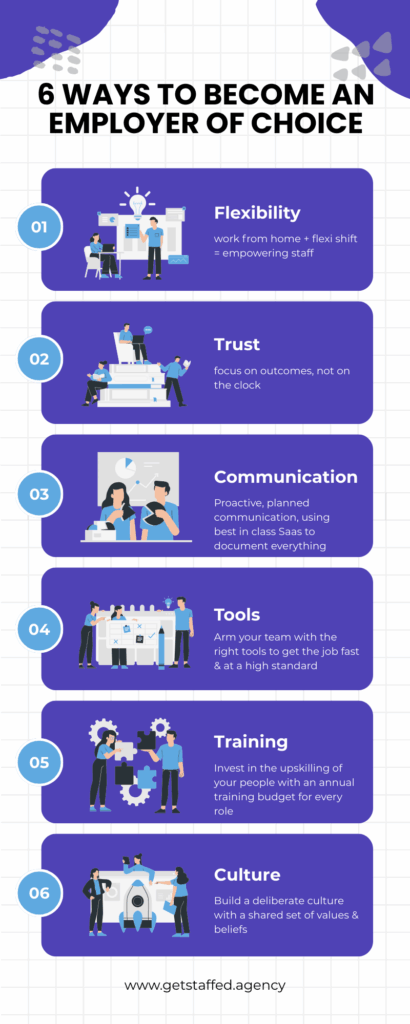
Forget the tokenistic perks. Nobody is sticking around for a free Uber Eats voucher. Here are 6 practical, no-fluff ways to become the kind of company the best remote talent is fighting to work for.
1. Master Genuine Flexibility (Not Just ‘Work-From-Home Wednesdays’)
There’s a world of difference between “you’re allowed to work from home” and “we trust you to get your work done.” The first is permission; the second is empowerment. Genuine flexibility isn’t about dictating which days someone can be remote. It’s about focusing on outcomes, not clock-watching.
Top remote talent wants to be measured by the quality of their work, not by the green dot next to their name on Slack. They want the freedom to structure their day in a way that works for them, whether that means going for a run at 11 am, picking up the kids from school, or doing their deep-focus work at 9 pm.
How to get it right: Ditch the obsession with a rigid 9-to-5 schedule. Set clear expectations and deadlines for tasks and projects (remember our Role Blueprints?), then give your team the autonomy to figure out how and when they get it done. You’ll be amazed at how much more productive and loyal someone is when you treat them like a professional.
2. Trust by Default: Treat Your Team Like Grown-Ups
Micromanagement is the number one killer of morale and productivity in a remote setting. If you’re constantly pinging your staff for updates, demanding they use mouse-jiggling software, or making them feel guilty for not replying to an email within 3.7 seconds, you’re telling them one thing: “I don’t trust you.”
The best remote employers operate on a principle of “trust by default.” They assume their team is competent, motivated, and doing their best work until they are proven otherwise. This isn’t about being naive; it’s about creating a psychological safety net that allows people to take ownership and innovate without fear.
How to get it right: Hire smart people, give them clear goals, and then get out of their way. Check in, don’t check up. Schedule regular, structured 1-on-1s to discuss progress and roadblocks, rather than firing off a dozen “just wondering…” messages throughout the day.
3. Communicate Like a Pro, Not a Parrot
When you’re not in the same room, you can’t rely on hallway chats or popping by someone’s desk. Communication has to be intentional, clear, and efficient. The enemy here isn’t silence; it’s noise. A culture of back-to-back Zoom calls and constant, urgent notifications is just the digital version of a chaotic, open-plan office. It’s exhausting.
Embrace the power of asynchronous communication. This simply means creating a system where work can continue even if team members aren’t online at the same time. It’s about writing things down, documenting decisions, and valuing thoughtful, written communication over knee-jerk reactions in a meeting.
How to get it right: Make your project management tool (like Asana or Trello) the single source of truth for all tasks and updates. Encourage detailed, clear communication in writing. Before you book a meeting, ask yourself: “Could this be an email, a Slack message, or a Loom video instead?” You’ll free up everyone’s calendar and give them back their most valuable resource: uninterrupted time to actually do their job.
4. Arm Your Team with the Right Tools (Don’t Send Them into Battle with a Spoon)
You wouldn’t ask a chef to cook in a world-class restaurant with a rusty pan and a blunt knife. So why would you expect your remote team to produce A-grade work on a clunky, five-year-old laptop and a dodgy internet connection?
Providing the right tools and technology is a direct reflection of how much you value your team and their contribution. Skimping on the essentials sends a clear message that you’re not serious about their success. This includes a quality laptop, subscriptions to the software they need to excel, a comfortable headset, and even a contribution towards their home internet bill.
How to get it right: Create a standard “remote work” tech package for all new hires. Don’t just provide the gear; ensure your systems are cloud-based and easily accessible. A smooth, frustration-free tech experience is one of the most underrated perks of a great remote job.
5. Training – Invest in Their Growth (Because a Rising Tide Lifts All Boats)
One of the biggest fears for remote workers is being “out of sight, out of mind.” They worry that their career will stagnate because they’re not physically present for those spontaneous opportunities or mentor-mentee moments that happen in an office.
Employers of choice actively combat this. They create deliberate pathways for growth and development for their remote team members. They understand that investing in their team’s skills is a direct investment in the company’s future.
How to get it right: Set aside a professional development budget for each team member to use on courses, conferences, or certifications. Implement a remote mentorship program. During performance reviews, have explicit conversations about career progression and what the next steps look like. Show them there’s a future for them at your company, not just a list of tasks.
6. Build a Culture, Not Just a Collection of People
Finally, the big one: culture. How do you build a sense of camaraderie and shared purpose when you’re not sharing a physical space? The answer is intentionality. You can’t just hope a great culture will emerge; you have to actively build it.
This isn’t about forced fun or awkward virtual trivia nights. It’s about creating genuine moments of connection. It’s about celebrating wins, big and small, in a public way. It’s about encouraging people to get to know each other as humans, not just as avatars on a screen.How to get it right: Start a #wins channel in Slack where everyone shares their achievements. Create non-work-related channels based on interests (#gardening, #gaming, #pet-photos). Schedule short, optional “virtual coffee” chats where the only rule is “no talking about work.” When you bring your people together, make it count.